Deck Conn Ship Systems
How a nuclear corvette stays alive when every terminal wants the same amps.
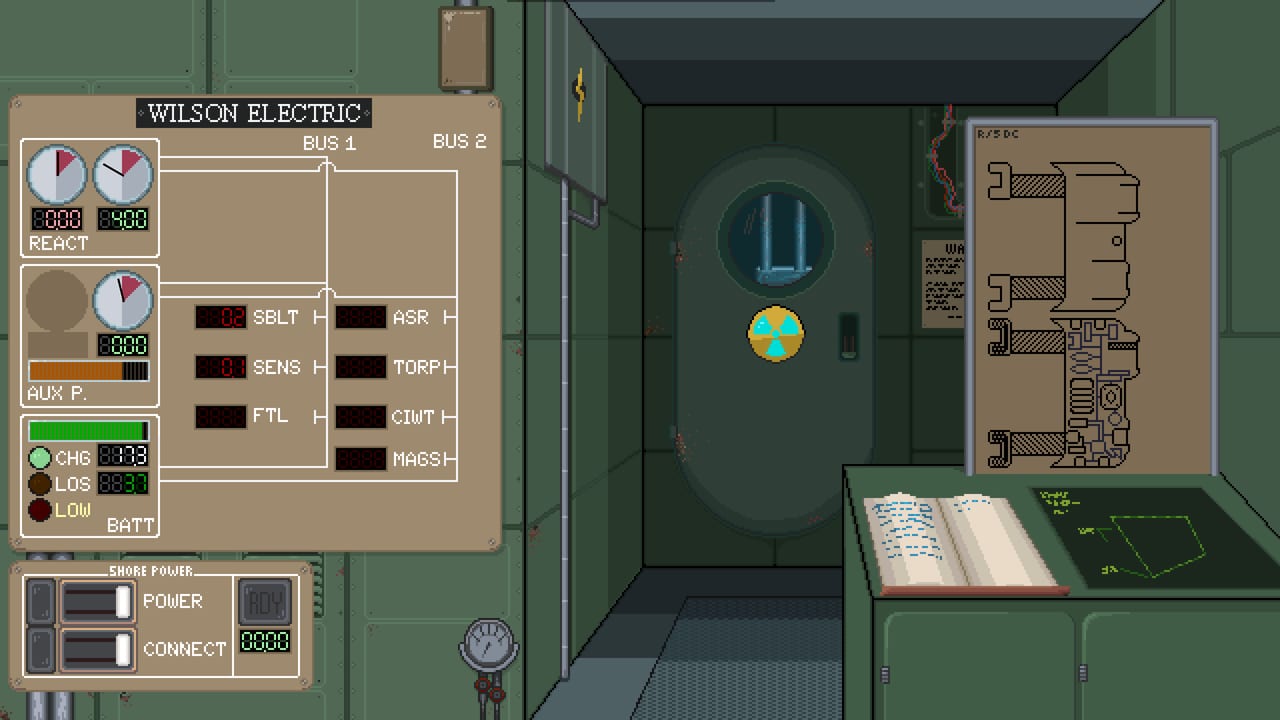
Ship systems are the real protagonist of Deck Conn. The launch feature list is almost a schematic: start the reactor, then balance reactor output, batteries, fuel, auxiliary power, sensors, propulsion, weapons, and defensive systems. This page explains that budget in captain language. For a printable allocation sheet, use the power planner. For which upgrades deserve the next yard visit, use the systems tier list.
The reactor is a promise, not a tank
You command a nuclear-powered corvette. That sounds like infinite energy. It is not. Nuclear here is a Cold War mood and a reason the ship can stay on station. The gameplay promise is limited output you must assign. Overdraw, and something you liked goes dark: the plot, the drive, the guns, or the thing that keeps the next volley off the hull.
Treat reactor output as the amount you may spend this turn. Treat batteries as the amount you may borrow. Treat fuel as the amount you may still travel. Captains who mash weapons until the CRT flickers are borrowing from a future turn they will not get.
Launch screenshots of the command glass label the same idea in hardware language: a BUS with generator and drain, a REACTOR with START / STOP / SCRAM, BATTERY charge and loss lamps, AUXILIARY fuel and vents, HELM, an FTL jump panel, SENSORS, magazines, and turret fire controls. Those labels are why this wiki talks about a seven-way split instead of a single health bar.
The seven-way split
Sensors. Active and passive. Passive is cheaper and quieter. Active is clearer and louder. Combat starts in the sensor picture, so this is not an optional luxury bus. See Combat for when to ping.
Propulsion. Range and facing. A corvette that cannot change distance is a target. A corvette that burns everything to close is a target with no way home. Campaign fuel lives here as much as it lives in the tanks.
Weapons. Only as honest as the power and the range you gave them. A full weapons draw with dead sensors is a loud prayer.
Defenses. The unglamorous bar. If you ever skip it to look heroic, skip it on a standalone scenario, not on a campaign patrol that still has to return.
Auxiliary power. The launch list calls it out separately. That usually means life support, damage control, or buses that are not the main plot. Do not discover what it was for by turning it off in a fight.
Batteries. Spike insurance. Use them to float a one-turn weapons or sensor pulse, then recharge. A battery that is always empty is a reactor that is already too small for your doctrine.
Fuel. The patrol clock. Winning a fight and missing the yard is a campaign loss. The campaign walkthrough is full of captains who forgot this.
Building a doctrine, not a vibe
Pick a doctrine and write it on the power planner:
- Quiet investigator. Floor on passive sensors and propulsion. Weapons at a ready minimum. Active sensors as a paid decision. Good for HQ “investigate” orders and for capture setups.
- Loud interceptor. Higher weapons and active sensors, accepted fuel cost, defenses not optional. Good when the contact is already shooting.
- Escort home. Defenses, propulsion, and batteries first. Weapons only to discourage a chase. This is the plan after a prize or a bad hit.
Doctrines fail when you mix them mid-turn without admitting it. If you switch from quiet to loud, pay for the switch. Do not keep the quiet fuel plan while running the loud sensor plan.
Upgrades change the budget
New weapons and systems from the campaign are not free. They raise the ceiling and the appetite. Before you buy, ask whether the reactor and crew can feed the new box. The tier list ranks appetite versus payoff. The crew page ranks whether anyone aboard can operate what you just bolted on.
Failure modes you will actually see
- Brown-out during an active ping, losing the plot at the worst bearing.
- Weapons charged, propulsion empty, enemy choosing the range.
- Defenses starved because the last shot “almost” killed them.
- Auxiliary bus ignored until a checklist item fails and the departure fantasy becomes a yard story.
- Fuel math that assumed a straight line home and did not include a second contact.
If a fight felt unfair, screenshot the power state, not only the enemy hull. Then reread Getting Started and Controls to be sure you were looking at the right terminal.
Keep the schematic honest
This wiki does not invent hit-point tables or secret bus names. It uses the systems MicroProse named in the September 1, 2026 launch materials. When a patch adds a bus, it will land on Updates. Until then, command the seven-way split like it is the whole war — because for a corvette captain, it is.
Frequently Asked Questions
Quick answers captains actually search for after launch.
What systems does Deck Conn actually list?
Launch materials name reactor output, batteries, fuel, auxiliary power, sensors, propulsion, weapons, and defenses.
Should weapons always get the most power?
No. A loud gun with no sensors or drive is a beacon. Start from the power planner.
Do upgrades break my power plan?
They can. Recheck the systems tier list whenever you bolt something new to the ship.
Is there a multiplayer engineer player?
No. One captain assigns the whole budget in this single-player game.